
What are the top challenges schools are facing today? – Thought Provoking Insights from Dr. Anthony Muhammad

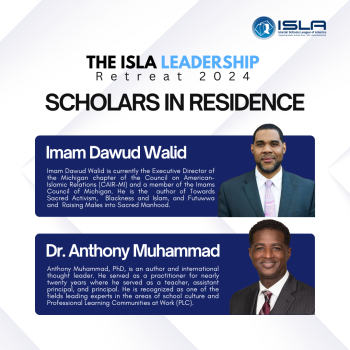
We had the honor of interviewing our scholar-in-residence, Dr. Anthony Muhammad, and his insights are nothing short of powerful. From tackling the biggest challenges facing schools today to predicting seismic shifts in education, Dr. Muhammad delivers thought-provoking guidance. His wisdom on making professional development more impactful is a must-read for every Islamic school leader. Don’t miss out on his expert advice as we gear up for this transformative retreat!

Here’s what Dr. Muhammad had to share…

What are the top challenges schools are facing today?

Schools are facing a myriad of challenges in the modern context.  Some I would consider self-inflicted wounds and others are externally imposed.  Some of the self-inflicted wounds include an unresponsiveness to best practice and ideological debates that have disrupted professional practice.  Research has been clear for decades that strong collaborative teams and cultures, creating a guaranteed and viable curriculum, and strong intervention systems have a profound impact on student learning. Despite these efforts, educators have continued to lean into antiquated practices like isolation and poor grading practices because they are more comfortable, not because they are better.


The loud and combative external rhetoric in American society has started to infect the field of education.  Hatred of immigrants, religious bigotry, and the process of advocating for some students over others, has created a Jim Crow-type atmosphere that educators are struggling to penetrate.  It has created this strange paralysis of action because people fear being the subject of hatred, and in some cases, they fear losing their jobs.

What is the biggest shift that you predict will impact American schools in the near future?

The seismic shift has already begun.  The rhetoric of segregation and transparent bigotry has shaped population trends, housing values, and how school quality is accessed.  Mary Kennedy opines that the goal is to create “doughnut communities” where the city center is hollow and empty and the surrounding suburbs are fat and doughy.  The saddest part of this is that those who have historically stood up to the progress of hatred appear to be tired and withdrawn from the fight.  So, the reality is that we fight for rights of all human beings in the public system or unite to create our own system organically that embraces the principles of freedom, justice, and equality.

In your opinion, what makes for an effective and successful professional development workshop?

In my experience, what’s important is professional learning, no matter what platform delivers it.  A workshop is simply a means to an end.  With the advent of technology, there are many ways to deliver professional learning.  I have witnessed recently that many educators are expressing dissolution with the traditional workshop format of professional development.  I do not begrudge them that opinion.  What I would simply ask is “What is your alternative?”  I can accept the fact that workshops and professional development have not always been engaging, relevant, and responsive.  What I can’t accept is dismissing the importance of professional learning.  I find that a good workshop or professional learning experience is relevant, engaging, and impactful.  People want to improve, and good workshops accelerate that desire to improve.

What are some topics that you typically provide PD workshops on?

Education is such a comprehensive and beautiful profession.  There are so many things that we can learn and use to grow our practice.  These include curriculum, instruction, assessment, leadership, and many other very timely topics.  My career as a consultant has drawn me to three topics that have fueled my career as a researcher, author, and consultant.  Those topics are teacher collaboration (PLC), school and organizational culture, and effective leadership.  As I analyze my 34 years as an educator, these topics represent the biggest vacuums in our field and inspire me to want to fill those vacuums with solutions.

Share one reason why you love being a Professional Development provider in addition to all of the other hats you wear.

I love being a consultant and professional development provider for many reasons.  The dominant reason is because I realized years ago that it would be nearly impossible to see a change in children if that change did first take place among adults.  It is pretty logical to assume that a patient will benefit greatly if his/her physician improves their professional practice.  It should also be easy to imagine that a student will learn more and thrive when he/she is being guided by a well-equipped, highly impactful professional educator.


For more insights and to meet Dr. Anthony Muhammad, join ISLA’s Leadership Retreat 2024:
Find Out More Here!