
KEY TAKEAWAYS
- The first full-time Islamic school in the U.S. was founded in 1932 by Clara Muhammad — a piece of history often missing from how the story gets told.
- Three ISLA leaders co-authored Chapter 16, drawing on personal interviews with founders and pioneers to fill long-standing gaps in the historical record.
- Islamic schools are growing fast: an estimated 100,000 students attend 400-450 full-time Islamic schools today, and nearly 1 in 4 Muslim families now sends a child to one.
- Download Chapter 16 free — and order the full volume from Beacon Books.
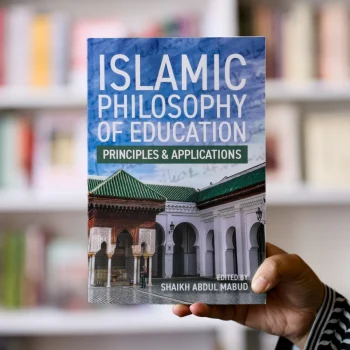
ISLA is proud to celebrate the publication of Islamic Philosophy of Education: Principles & Applications, edited by Shaikh Abdul Mabud — a substantial new volume on Islamic education and school leadership that brings together scholars, practitioners, and visionaries from around the world to articulate what an authentically Islamic philosophy of education looks like in theory and in practice.
We are especially honored that three ISLA leaders are among the volume’s contributing authors — the co-authors of Chapter 16, and a long-time ISLA champion whose work appears in Chapter 8.
A Chapter Years in the Making
Chapter 16: Looking Back and Re-envisioning the Future: Islamic Schools in the United States was co-authored by three ISLA leaders: Dr. Shaza Khan, ISLA’s Executive Director; Dr. Patricia Salahuddin, former Vice Chair of the ISLA Board, recipient of ISNA’s Lifetime Achievement Award and several other national honors for her service to Islamic education; and Dr. Seema Imam, former Chair of the ISLA Board, likewise an ISNA Lifetime Achievement awardee with decades of recognized contributions to the field. Both Dr. Imam and Dr. Salahuddin continue to serve on the ISLA Board.
Writing from three distinct vantage points — second-generation Pakistani-American, African-American, and white American Muslim women — the authors deliberately set out to center voices that have long been marginalized in the published literature on Islamic education in this country. To do so, they did not rely on what was already in print. They spent countless hours grappling with terminology to ensure their language honored the people and the work being referenced, and they conducted personal interviews and primary-source conversations with founders, principals, and pioneers across the country — many of whom had never been formally interviewed before. The result is a chapter that fills important gaps in the historical record and tells a more complete, more accurate, and more inclusive story than has previously been available.
From 1932 to Today
The chapter traces the full historical arc of full-time Islamic schools in the United States — beginning not, as many accounts do, in the 1970s with the wave of immigrant-founded schools, but in 1932 in Detroit, Michigan, where the first full-time Islamic school in this country, the University of Islam, was established by Elijah and Clara Muhammad. Those schools were renamed the Clara Muhammad Schools in 1975 by Imam Warith Deen Muhammad, in honor of his mother’s extraordinary courage and her insistence — at a time of brutal anti-Black violence — that her children deserved an educational setting that affirmed their dignity, their identity, and their faith. From there, the chapter walks readers through the rise of “community Islamic schools” in the post-1965 immigrant Muslim wave, the founding of the professional organizations — including CISNA and ISLA — that grew up to support the field, and the current state of Islamic schools today.
A Field That Is Growing — and Mattering More
Drawing on the 2022-23 ISLA Islamic School Profile Survey, the chapter offers a current, data-grounded picture of where the field stands. There are now an estimated 400-450 full-time Islamic schools in the United States, serving approximately 100,000 students — more than three times the number enrolled just sixteen years earlier. And recent national data from the Institute for Social Policy and Understanding (ISPU) finds that nearly one in four Muslim families with school-aged children in the U.S. now sends at least one child to a full-time Islamic school.
That growth matters. In a national climate where Muslim children’s identities are too often pulled between worlds, full-time Islamic schools remain one of the very few institutions where a young person’s Muslim identity and American identity are not in tension but intentionally cultivated together. These are rare spaces where children grow up confident in their faith, fluent in their tradition, and equally at home in the broader civic life of their country — schools that, as one researcher quoted in the chapter observes, help reassure Muslim children that they can fully embrace their American citizenship without repudiating Islam. That formation work is hard to overstate, and few institutions are positioned to do it as intentionally as a well-led Islamic school.
A Vision for What Comes Next
The chapter’s final section, Entering a New Frontier: A Vision for Islamic Schools of the Future, sketches what the authors believe an ideal Islamic school should look like:
“The ideal Islamic school is God-centred and steeped in the love of the Prophet Muhammad. It is a beacon of light for the entire community in which it resides. It is not isolated and obscure, rather Muslims and non-Muslims alike of all racial and ethnic backgrounds know it is present because of the upright character of the people and good actions flowing forth from it.”
It is a vision of schools that are racially and economically diverse, deeply rooted in Islamic values, engaged with the world around them, and unafraid to address injustice. The authors close with a call to “re-envision” Islamic schools so that “everything we do, use and produce [is] grounded in Islam — from our curriculum to our pedagogy to our leadership and organizational structures to our aspirations for students’ success.”
Read the Chapter for Free
We are delighted to make Chapter 16 available as a free, downloadable PDF. Whether you are a school leader, a board member, a teacher, a parent, a donor, or a scholar invested in the future of Muslim education in America, this is reading worth your time.
We are also proud to celebrate the inclusion of Chapter 8: Framework for an Islamic-based Curriculum by long-time ISLA champion Dr. Freda Shamma — a foundational thinker whose work has shaped Islamic curriculum development for generations of educators. Dr. Shamma’s chapter complements Chapter 16 and underscores how deeply ISLA’s network is woven into the scholarly conversation about Islamic education.
Read Chapter 16 free. Then take the next step: order the full volume from Beacon Books and add it to your school’s professional library, your board’s reading list, or your own bookshelf.
➤ Purchase Islamic Philosophy of Education: Principles & Applications from Beacon Books
Frequently Asked Questions
- What is Islamic Philosophy of Education: Principles & Applications?
It is a new edited volume from Beacon Books, edited by Shaikh Abdul Mabud, that brings together scholars, practitioners, and visionaries from around the world to articulate what an authentically Islamic philosophy of education looks like in both theory and practice. It is essential reading for Islamic school leaders, board members, teachers, scholars, and parents.
- Who wrote Chapter 16, and what does it cover?
Chapter 16, Looking Back and Re-envisioning the Future: Islamic Schools in the United States, was co-authored by three ISLA leaders: Dr. Shaza Khan (ISLA’s Executive Director), Dr. Patricia Salahuddin (former Vice Chair of the ISLA Board and ISNA Lifetime Achievement awardee), and Dr. Seema Imam (former Chair of the ISLA Board and ISNA Lifetime Achievement awardee). The chapter traces the full history of Islamic schools in America — from the first Islamic school founded in 1932 by Clara Muhammad, through the rise of community Islamic schools in the late twentieth century, to the field’s current state — and closes with a vision for what Islamic schools can become.
- How can I download Chapter 16 for free?
ISLA has made Chapter 16 available as a free, downloadable PDF for school leaders, board members, educators, parents, donors, and scholars. Use the Download Chapter 16 link earlier in this post to access your copy.
- Where can I purchase the full book?
Islamic Philosophy of Education: Principles & Applications is available directly from Beacon Books at beaconbooks.net. We encourage you to add it to your school’s professional library, your board’s reading list, or your own bookshelf.
- Why does this chapter matter?
The full history of Islamic schools in the United States — beginning with Clara Muhammad’s 1932 founding of the first Islamic school in Detroit — has rarely been told in one place. Chapter 16 fills that gap, drawing on primary-source interviews with founders and pioneers and centering voices that have been marginalized in the published literature. For anyone shaping the future of Islamic schools today, understanding this fuller history is foundational.
