
“The believers, men and women, are allies of one another. They enjoin what is right and forbid what is wrong…” (Qur’an 9:71)
An Invitation into Sacred Work
There are moments in life when you know you are standing in sacred space. This sacred knowing is not because of the building you are in, but because of the people gathered there and the purpose that has brought them together.
Recently, I had the profound honor of attending a workshop hosted by The Hurma Project in Toronto, Canada, alongside ISLA Executive Director, Dr. Shaza Khan. Invited by Dr. Ingrid Mattson and the Hurma Project team, I joined educators, chaplains, researchers, counselors, lawyers, organizers, and community leaders from across North America, the United Kingdom, and beyond for a deeply meaningful gathering focused on preventing spiritual abuse and strengthening accountability within Muslim institutions.
We were especially honored to participate because of our ongoing collaboration with the Hurma Project on the Sexual Abuse Prevention Toolkit (SAPT) Principles, a foundational document that will soon be released. These principles serve as a guiding Islamic framework for ISLA’s Sexual Abuse Prevention Toolkit, helping ensure that prevention, accountability, compassion, justice, and the protection of children remain rooted in our faith tradition.
Our invitation affirmed something we have long believed: safeguarding children and vulnerable members of our communities requires intentional, thoughtful collaboration across disciplines, institutions, and countries. This work cannot be done in isolation. It demands scholars, educators, mental health professionals, legal experts, researchers, survivors, and community leaders working together with sincerity, wisdom, and courage.
I felt an honor to be on the traditional territory of the Mississaugas of the Credit, the Anishnabeg, the Chippewa, the Haudenosaunee, and the Wendat peoples where the workshop was held at the Westin Harbour Castle. The fully booked workshop with a waiting list, evidence of the growing recognition that our communities must courageously address these difficult issues, explored the painful reality of spiritual abuse –when religious knowledge, authority, status, or trust are used to manipulate, exploit, or harm others.
This gathering was also an opportunity to contribute to the Hurma Project’s forthcoming handbook, currently in development and expected to be published later this year. Participants were invited to review emerging material, offer professional insight, and help strengthen a resource designed to support Muslim institutions in preventing spiritual abuse and responding with integrity when harm occurs. It was both humbling and inspiring to contribute to a project that will serve communities well beyond the walls of this workshop.
Hurma: Protecting What Allah Has Made Sacred
The very name of the project moved me.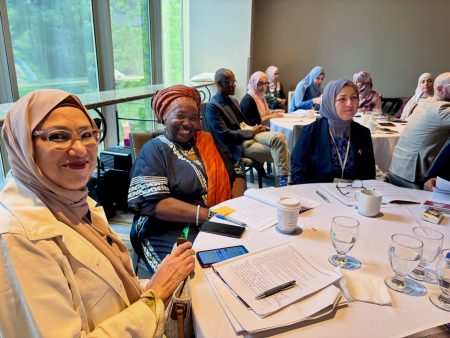
Hurma comes from the Arabic root associated with sacred inviolability. It reflects the inherent dignity, sanctity, and worth that Allah has bestowed upon every human being. The Hurma Project reminds us that every person carries a sacred trust from Allah, and that trust must be protected.
One of the most powerful lessons from the gathering was the distinction between violations of the Rights of Allah (Huquq Allah) and violations of the Rights of People (Huquq al-‘Ibad). While private repentance, self-accountability (muhasaba), and seeking Allah’s forgiveness may be sufficient when one has committed a sin affecting only their relationship with Allah, harms committed against people require something more.
We reflected on how spiritual abuse often accompanies other forms of abuse, including emotional, financial, physical, and sexual abuse. Most importantly, we examined how the consequences of such violations extend beyond the individual. When a trusted religious leader causes harm, the victim’s relationship with Islam itself, and even their relationship with Allah, can be wounded.
This reality makes prevention and accountability more than merely organizational concerns: it garners sacred responsibilities.
Courageous Conversations Change Communities
Throughout the workshop, participants discussed practical approaches to regulating power and enforcing accountability through education, training, clear standards, role clarification, transparency, supervision, support systems, and fair investigative processes. We explored interim measures that protect those harmed while ensuring due process and examined how Muslim organizations can respond with integrity when allegations arise. I found it to be affirming and powerful as we engage in our own Sexual Abuse Prevention Toolkit and informing our communities.
Again and again, we returned to the question: Who is responsible for intervening?
The answer was clear.
The responsibility belongs to all of us.
As Allah reminds us in Surah At-Tawbah (9:71), believing men and women are protectors and allies of one another. This is a collective obligation (fard kifayah). Good intentions alone are not enough. Without implementation, our responsibility remains unfulfilled.
The gathering was also a reminder that this work is not merely about preventing harm. It is about building beautiful communities.
From Accountability to Healing
In the workshop’s final section on renewal, participants imagined what healing communities might look like after harm has occurred. What would it mean for every person to feel known, valued, recognized, and connected to a meaningful role within the community? How might dignity, belonging, and safety become lived realities rather than aspirational ideals?
(Qur’an 9:71) One statement stayed with me, “We can never get rid of this problem without talking about it.”
These words, shared from the research of Scottish scholar Maariyah Adam, capture a truth that applies across all of our institutions. Silence does not protect communities. Honest, compassionate, principled conversations do. Allah, swt, said, “The believers, men and women, are allies of one another. They enjoin what is right and forbid what is wrong…”
I was inspired by the remarkable leadership and scholarship of Dr. Ingrid Mattson, Mihad Fahmy, Maysa Haque, Dr. Zainab Kabba, Henna Khawja, Salma Abugideiri, Maariyah Adam, Dr. Rahmanara Chowdhury, Lauren Schreiber, and many others whose expertise and dedication enriched the gathering.
As Project Director of the ISLA Sexual Abuse Prevention Toolkit, I left Toronto affirmed in the importance of the work we are doing. The conversations, frameworks, and relationships cultivated through the Hurma Project strengthen our collective efforts to create safer schools, masajid, organizations, and community spaces. I returned from Toronto with renewed conviction and excitement for what lies ahead.
Carrying the Vision Forward 
Our Sexual Abuse Prevention Toolkit is currently undergoing review by Islamic scholars, trauma-informed practitioners, child protection professionals, and leaders in sexual abuse prevention to ensure that every resource is both Islamically grounded and informed by best practices. This collaborative review process reflects our commitment to excellence, integrity, and serving our communities with wisdom.
When released, the ISLA Sexual Abuse Prevention Toolkit will include more than 40 practical resources designed for educators, parents, Islamic leaders, youth, caregivers, board members, and community members. More than a collection of documents, it is being developed as a living resource that equips communities to prevent abuse, recognize warning signs, respond appropriately, strengthen policies, and foster cultures where every child is protected and every family is empowered.
This is only the beginning.
Insha-Allah, the toolkit will continue to grow through ongoing professional development, webinars, workshops, community conversations, downloadable resources, and implementation support. Our prayer is that individuals and institutions will return again and again, seeking more than access to new materials, but to deepen their understanding, strengthen their practices, and join a growing movement committed to making Muslim spaces safer for every child.
Together, we are building more than resources.
We are building a culture of protection.
A Collective Amanah
Traveling for knowledge and collaboration has always been part of our Islamic tradition. Our scholars journeyed across continents seeking wisdom, building relationships, and serving the ummah. This gathering felt like a continuation of that noble legacy. We traveled to do more than simply attend a workshop, we traveled to strengthen our capacity to protect the sacred dignity of those entrusted to our care.
At a time when Muslims around the world are facing immense challenges, from genocide and displacement to Islamophobia and social fragmentation, our institutions must remain places of refuge, healing, and trust.
This is more than child protection. It is an act of worship.
Every policy written.
Every educator trained.
Every parent empowered.
Every child believed.
Every boundary honored.
Every institution strengthened.
This is the work of preserving hurma.
This is the work of protecting dignity.
This is the work of honoring the trust Allah has placed in us.
And it is work that none of us can do alone.
May Allah bless the Hurma Project, its visionary leaders, and all those committed to creating communities where every person’s sacred dignity is recognized, protected, and honored.
Ameen.
