
The History & Future of Private Schooling in America
September 8–10, 2025 | Catholic University of America
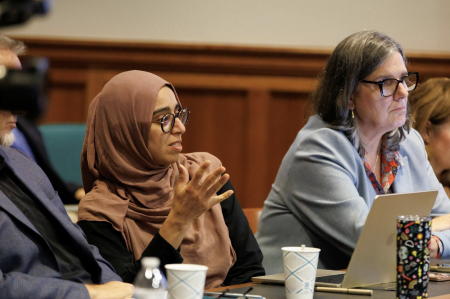
Dr. Shaza Khan at the CAPE meeting, September 8-10, 2025, Washington, D.C.
100th Anniversary: History of Private Schooling in America
ISLA’s Executive Director, Dr. Shaza Khan, attended the Council for Private Education (CAPE)’s Fall Board Meeting, which brought together dozens of diverse policymakers and private school association leaders to explore the evolving landscape of education in America with a keen focus on private schools.
This year’s meeting also commemorated the 100th anniversary of Pierce v. Society of Sisters (1925), a landmark decision affirming parents’ rights to establish private schools. The meeting was an opportunity to learn more about the important history of private schooling in the United States and its evolving future.
Importantly, the meeting also solidified our understanding of the key ways in which Islamic school stakeholders need to continue to remain engaged in their local and national educational initiatives and how to prepare for upcoming shifts in the landscape impacted by trends in higher education, the economy, and cross-industry disrupters like Artificial Intelligence (AI).
Historical Context and Legal Foundations
Justice Clint Bolick of the Arizona Supreme Court was one of the speakers at the Commemorative Meeting, marking the 100th year since the historical Pierce v. Society of Sisters Supreme Court decision that simultaneously allowed for the establishment of private schools and parental choice in the United States.
Contrary to contemporary debates portraying school choice as a polarizing issue between conservatives and liberals, the historical roots of public education tell a more complex story. Both the KKK and “progressive” groups historically advocated for public schooling, with the KKK famously promoting the slogan “One Flag, One School, One Language” – reflecting their goal to suppress language and cultural practices that differed from white Anglo-Saxon norms. Other nativist movements and the Blaine Amendments, which were also rooted in anti-Catholic sentiment, highlight the nation’s past struggles over parental choice, educational freedom, religious liberties, and the struggles that center around actualizing the ideal of a pluralistic and democratic society.
Also discussed was a more recent court case, Mahmood v. Taylor (2022), which protects parents’ rights to opt children out of public school curriculum they find objectionable based on their religious beliefs.
Current Developments Impacting Private Schools
Federal Tax Credit Scholarships (effective Jan 1, 2027):
A federally enshrined law was recently passed that will allow individuals to donate to Scholarship Granting Organizations (SGOs) and receive a 100% tax credit, dollar for dollar, of up to $1,700. The SGOs will be able to provide scholarships for students to utilize on eligible expenses, including private school tuition, tutoring, and other resources. Importantly, the program does not take money from federal funds that are currently allocated to public schools; rather, it relies on funding from private donors to the SGOs. Furthermore, the scholarship is not limited exclusively to use against private school tuition. Rather, there is a wide range of uses that students (including those attending public schools) can utilize.
What we know:
- SGOs must be 501(c)(3) nonprofits
- SGOs will need to adhere to federal and state-specific protocol and policies related to scholarship recipient selection
- Scholarship amount will be set by the SGO, which will also verify student eligibility
- Monies cannot be earmarked for specific students
- The program will be governed by the National Treasury, not the Department of Education, because it is a tax credit program
- Schools and organizations like ISLA will need to work to create awareness among parents to donate to the SGOs.
- Spring 2027- SGOs provide first scholarships
Statutory Ambiguities
- How do multi-state SGOs determine that the SGO is “located” in the state?
- Can married couples filing jointly donate $1,700 per individual taxpayer?
- How will the federal credit treat taxpayers who give to state-level scholarship tax credit programs (for the states that already have this program)?
- Are homeschool students eligible for scholarships, considering 18 states classify homeschools as private schools?
- How does an SGO verify student eligibility?
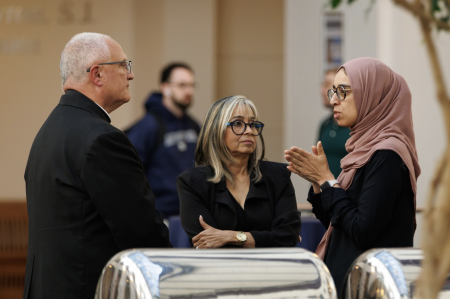
CAPE offers an opportunity for ISLA to connect with and learn from other national and state private school organization leaders and service providers.
Trends in Education
College Admissions and Graduates’ ROI
Preston Cooper, Senior Fellow, American Enterprise Institute, highlighted that not all degrees are created equal. In fact, data show that some master’s programs produce a negative ROI, while undergraduate degrees in fields like finance or engineering have yielded degree-bearing graduates significant returns. The current administration is using data like this to help propose limits on federal student borrowing so that they are not beholden to heavy debt from degrees that do not produce the return on investment to help the student recover and repay those costs.
Cybersecurity & School Safety
Dr. Keri D. Ingraham from the Cybersecurity and Infrastructure Security Agency (CISA) emphasized:
- Assessing and mitigating cybersecurity risks in schools.
- Implementing Secure by Design principles when integrating technology.
- Conducting exercise programs and leveraging advisors for ongoing guidance.
- Asking vendors the right questions about data privacy, MFA, and encryption compliance.
CISA has a number of free resources on its website, including the document, “Protecting Our Future: Partnering to Safeguard K-12 Organizations from Cybersecurity Threats.” The document can be accessed here.
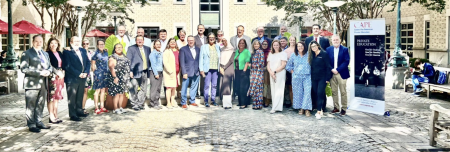
The board of the Council for Private Education convenes twice a year in Washington, DC, to understand legislation and trends that may impact private schooling in the country. ISLA is a board member of CAPE.
Key Takeaways
- Parental Choice is Paramount: From Pierce to Mahmood, parental rights remain central in shaping education.
- School Choice Programs Are Expanding: Federal tax credits and state SGOs offer new opportunities for families.
- Financial Literacy Matters: Understanding college ROI and student debt is critical for families and policymakers.
- Cybersecurity Cannot Be Ignored: Protecting student data and school infrastructure is essential in today’s digital environment.
- Community Engagement Strengthens Schools: Sharing successes, hosting visits, and fostering partnerships are vital for sustaining educational freedom.
The CAPE Fall Meeting reinforced the importance of freedom, choice, and accountability in education, while offering practical tools for schools navigating the 21st-century landscape. It also reaffirmed ISLA’s commitment to having a seat at the table to understand trends and policies that can impact Islamic schools in the United States.
Note: ISLA used AI to support the creation of this blog post. ISLA selectively uses AI to support overall organizational efficiency with all AI-generated content carefully reviewed and approved by staff. We maintain a commitment to prioritize accuracy, authenticity, and sincerity in all of our communications.
