

Building Inclusive Classrooms: ISLA and Dr. Nelly Kaakaty Equip Educators to Support Students with ADHD, Dyslexia, and Executive Functioning Challenges
On October 15, 2025, the Islamic Schools League of America (ISLA) hosted a transformative professional development webinar, “Early Signs and Classroom Strategies for ADHD, Dyslexia, and Executive Functioning Challenges,” featuring Dr. Nelly Kaakaty, and sponsored by MUHSEN (Muslims Understanding and Helping Special Education Needs).
The event drew an extraordinary 321 registrants representing 29 states and provinces, 8 countries, and 103 educational institutions—including 236 teachers and 46 school leaders. This global reach reflected both the urgency and the dedication within Islamic schools to better support neurodiverse learners and to cultivate inclusive classrooms guided by compassion, research, and faith.
Inclusion as Ihsan
Dr. Kaakaty, a licensed educational psychologist and leading voice in inclusive education, began the session by grounding her message in the spiritual principles of rahmah (mercy) and ihsan (excellence). “Supporting learners with differences is not extra work,” she reminded attendees. “It is part of our ihsan as educators.”
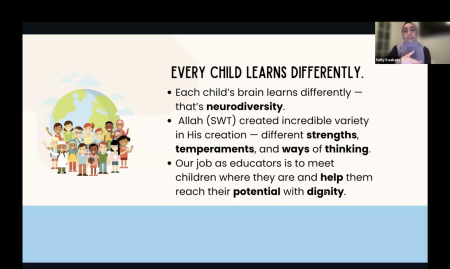
She highlighted that approximately one in five students has a learning difference, meaning that nearly every classroom includes children who process information, focus, or organize differently. “Our job,” she emphasized, “is to meet children where they are and help them reach their potential with dignity.”
Drawing on both Islamic teachings and scientific understanding, Dr. Kaakaty framed neurodiversity—the natural variation in how brains function and learn—as part of Allah’s divine design. “Allah (SWT) created incredible variety in His creation—different strengths, temperaments, and ways of thinking. Recognizing and nurturing that diversity,” she said, “is a form of worship.”
Recognizing Early Signs
Much of the session focused on helping educators recognize early indicators of ADHD, dyslexia, and executive functioning challenges, so that interventions could begin before students experience repeated frustration or self-doubt. “Early intervention is critical,” Dr. Kaakaty explained, “because strategies become harder to implement as students grow older and habits of avoidance or discouragement set in.”
She described dyslexia as a neurobiological, language-based learning difference that affects decoding, spelling, and fluent reading, though it is unrelated to intelligence or motivation. Early signs might include difficulty distinguishing letter sounds, frequent spelling errors—especially with sight words—or reluctance to read aloud.
ADHD, she explained, is not simply a lack of focus but a challenge in regulating attention. “These students aren’t inattentive—they’re paying attention to everything,” she said. ADHD may manifest through impulsivity, restlessness, or challenges with time management.
Executive functioning difficulties—often overlapping with ADHD—involve struggles with planning, organization, and self-regulation. Dr. Kaakaty likened executive functioning to “the brain’s air traffic control system.” When these skills lag, students may forget materials, lose track of tasks, or have trouble starting assignments.
“What may look like laziness or defiance,” she explained, “is often cognitive overload. Once we understand that, we can shift from reaction to compassion.”
Practical and Proven Strategies
Dr. Kaakaty shared practical, research-based strategies that educators can implement immediately—tools designed to empower teachers and foster calm, structured classrooms where all learners can succeed. Her recommendations included:
- Chunking lessons into shorter, more manageable segments (5–10 minutes each).
- Using visual supports like color-coded folders, daily agendas, and timers to help students stay organized.
- Establishing predictable routines that reduce anxiety and support transitions.
- Incorporating multisensory learning—seeing, hearing, touching, and moving—to reinforce understanding.
- Providing alternative assessments, such as oral responses, visuals, or short videos, to accommodate different strengths.
As she reminded participants, “Reading—Iqra—was the first word revealed. Helping children access language and literacy is both a spiritual and educational duty.”
Building on her insights, attendees enthusiastically contributed classroom-tested strategies that have worked in their own schools, such as:
- Integrating movement-based learning (jump-rope, skip counting, interactive notebooks, or standing stations).
- Using magnetic letters, manipulatives, sand trays, and color-coded charts for multisensory engagement.
- Pre-teaching key vocabulary before reading a surah or tackling a new concept to build comprehension.
- Encouraging student voice and agency through dictation, visuals, or oral presentations.
- Celebrating effort and progress rather than speed, helping students build confidence through small, consistent wins.
These shared practices reflected the rich collaboration and innovation across the ISLA community, where teachers blend creativity with faith-based care to ensure every student is included and supported.
Impact and Measurable Growth
The webinar’s post-event data demonstrated remarkable growth in educator understanding and confidence.
Before the session:
- 25.7% of attendees reported having none or only basic understanding of early signs and classroom strategies for students with ADHD, dyslexia, or executive functioning challenges.
- 19.8% reported a strong understanding.
After the session:
- 0% reported none or basic understanding.
- 58.4% reported a strong understanding—a nearly threefold increase.
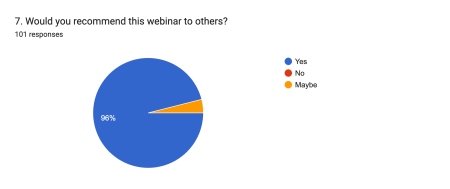
Additionally, 95% said they were likely or very likely to apply what they learned in their Islamic schools, and 96% said they would recommend the workshop to others.
These results underscore the transformative power of high-quality, values-aligned professional learning in shaping classroom practice and culture.
Educator Reflections
Participants praised both the depth and the practicality of Dr. Kaakaty’s session:
“Thank you ISLA, MUHSEN, and Dr. Nelly Kaakaty. This is a PD every educator should attend. Dr. Nelly provided thorough yet easy-to-understand descriptions and actionable strategies that can be immediately implemented in the classroom, while connecting to why inclusion is such an important practice as Muslims.”
“This workshop was insightful and empowering. It gave me a better understanding of how to recognize and support students with ADHD, dyslexia, and executive functioning challenges using effective classroom strategies grounded in compassion and structure.”
“Listening to the instructor gave me confidence in what I have been doing in my class alhamdulillah—and now I have additional ideas to support students who need extra help.”
(Testimonials have been lightly edited for clarity while maintaining original intent.)
A Shared Commitment to Inclusion
With heartfelt gratitude to MUHSEN, ISLA recognized the importance of partnership in advancing inclusive education. MUHSEN continues to build better communities and improve the daily lives of adults and children living with disabilities—a mission that beautifully complements ISLA’s work in empowering educators. Learn more at muhsen.org.
Dr. Kaakaty concluded the session with a reminder that resonates far beyond the classroom: “Inclusion is not a favor—it is faith in action. When we teach with ihsan, we don’t just educate minds; we nurture hearts.”
For more resources and professional insights from Dr. Nelly Kaakaty, visit learningwithdrk.com, follow @learningwithdrk on social media, or reach out at learningwithdrk@gmail.com.
To explore upcoming ISLA professional development offerings and webinars, visit theisla.org.
Together, ISLA, MUHSEN, and educators worldwide are redefining what it means to teach with compassion—ensuring every child, regardless of ability, finds belonging, purpose, and success in our Islamic schools.
Session Recording:
youtube.com/watch?si=wBw1rGWB_72f7l0F&v=FlV0DjdkhvI&feature=youtu.be
