
In response to growing concerns around school safety and crisis preparedness, the Islamic Schools League of America (ISLA) partnered with Joffe Emergency Services to host School Crisis Response & Preparedness, a free emergency webinar designed specifically for Islamic school administrators and leaders.
Led by expert guest speaker Chris Joffe, the webinar focused on practical, compassionate, and actionable steps schools can take before, during, and after a crisis. Rather than approaching safety through fear, the session emphasized preparedness, communication, and community care — equipping attendees with tools they could begin implementing immediately.
Inside the Webinar
During the one-hour session, school leaders explored:
- How to build a simple emergency plan that staff can realistically follow
- Ways to practice preparedness through low-stress drills and tabletop exercises
- Defining roles and responsibilities during the critical first minutes of an emergency
- Communicating clearly and calmly with families, staff, and students
- Safely reunifying students with caregivers
- Supporting emotional recovery and community well-being after a crisis
- Practical ways to use the ISLA Crisis Toolkit within their own schools
- Live Q&A with safety experts and fellow school leaders
The discussion also highlighted the unique realities Islamic schools and masajid face as shared community spaces, while reinforcing the importance of maintaining psychological safety for both students and staff.
Watch the Recording:
For those who were unable to attend live or for schools wishing to revisit the discussion with their teams, the full webinar recording below.
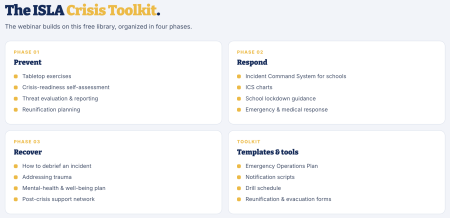
The ISLA Crisis Toolkit
The webinar builds upon the free ISLA Crisis Toolkit, a growing collection of resources organized into four key areas:
Full toolkit: theisla.org/crisis-toolkit
Key Takeaways Shared During the Session
Throughout the webinar, participants and presenters shared thoughtful reflections and practical recommendations, including:
- Practicing lockdown drills regularly with a goal of securing the school within 30 seconds
- Establishing clear communication systems during emergencies
- Using walkie-talkies and layered communication methods
- Reducing visibility during lockdowns through blinds, covered windows, and obscured spaces
- Identifying designated safety or reunification areas for outdoor spaces and recess areas
- Maintaining strong collaboration between school and masjid leadership
- Supporting psychological and emotional safety alongside physical security
The session also underscored that preparedness is not only about procedures — it is about building trust, confidence, and resilience within school communities.
Links & Resources:
The following free resources were shared during the webinar for schools seeking additional guidance and training:
Mental Health & Counseling Resources
- SAMHSA (Substance Abuse and Mental Health Services Administration)
- American Psychological Association (APA)
- American Counseling Association
Joffe Emergency Services & Training Resources
- Faculty & Staff Crisis Response Orientation: https://www.joffeacademy.com/
courses/take/faculty-and- staff-crisis-response- orientation - School Shooting Response Toolkit: https://www.
joffeacademy.com/courses/take/ school-shooting-response- toolkit-8-27-25 - School Safety Assessment Tool: https://www.
joffeemergencyservices.com/ joffe-school-safety-swiss- cheese-assessment - Camera Safety Webinar Recording
- Joffe Free Resources Signup
- Joffe Academy Trainings & Webinar Recordings
- Free Resources: https://www.
joffeemergencyservices.com/ free-resources
For additional questions or personalized support, attendees were also encouraged to contact Joffe Emergency Services directly at support@joffeemergencyservices.com.
As Islamic schools continue working to nurture safe, compassionate, and resilient learning environments, ISLA remains committed to providing timely resources, professional development, and community-centered support for school leaders across the country.
