
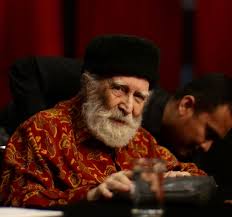
This Ramadan, the Muslim world bid farewell to one of the greatest intellectual giants of our age: Professor Syed Muhammad Naquib al Attas. He returned to his Lord on the 18th of Ramadan.
Professor Naquib al Attas came from the noble Ba Alawi lineage, a family entrusted with carrying the light of Islam across the Malay-Indonesian archipelago. Through this blessed lineage, he was a descendant of the Prophet ﷺ through Sayyiduna al Husayn رضي الله عنه, the son of Sayyidah Fatimah and Ali رضي الله عنهما. Incidentally, Sayyiduna Ali رضي الله عنه was struck with a sword on the 19th of Ramadan and later departed this world on the 21st of Ramadan. SubhanAllah. What a beautiful time for such a soul to return to his Lord.
Prof. Naquib’s life, his work, and even the timing of his return reflect a deep connection to a legacy of knowledge, service, and spiritual refinement. For many of us engaged in education and Islamic work, Professor Naquib was not simply a scholar. He was a civilizational thinker. His ideas reshaped how we understand the revival of Islam within our schools, our institutions, and our intellectual frameworks. His writings on Islamic worldview, knowledge, and adab quietly guided many of us long before we ever had the opportunity to engage in his work directly.
A Recent Encounter with His Senior Student
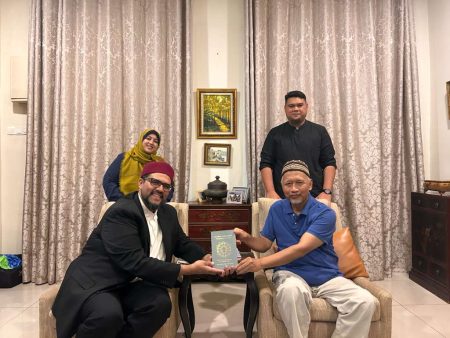
Wadud Hassan and Leiya Hasan from ISLA member Muraqaba School in Frisco, Texas with Prof. Wan Daud and Br. Aizuddin from the Integrated Islamic Schools Network of Malaysia.
Recently, during our visit to Malaysia to train Islamic schools, we tried to meet Professor Naquib al Attas but were not able to due to his declining health. Even many of his closest students were no longer able to visit him regularly. Instead, we were blessed with the opportunity to meet one of his most senior students, Professor Wan Mohd Nor Wan Daud, who first held the title of Syed Muhammad Naquib al Attas Distinguished Chair of Islamic Thought at Universiti Teknologi Malaysia.
Professor Wan graciously invited us to his home. What was meant to be a visit became a deeply reflective conversation about the legacy of his teacher. As we sat together, one idea kept returning again and again in our discussion: adab. That conversation has stayed with me ever since.
Wadud Hassan and Leiya Hasan from ISLA member Muraqaba School in Frisco, Texas
with Prof. Wan Daud and Br. Aizuddin from the Integrated Islamic Schools Network of Malaysia.
Adab: Putting Things in Their Proper Place
Professor Naquib defined adab as putting things in their proper places. At first glance, this may seem simple, but in reality, it is one of the most profound definitions of knowledge and human conduct. Adab is not merely etiquette, nor is it limited to outward manners. It is wisdom rooted in prophetic knowledge. It is the ability to recognize the proper order of reality, beginning with our relationship with Allah, and to act accordingly with humility and awareness.
He would often remind us that there are people who possess knowledge but lack adab. This distinction is critical. Knowledge without adab can lead to arrogance, confusion, and even harm. But knowledge rooted in adab elevates the soul. It refines the heart and aligns the individual with divine purpose.
A person of adab carries themselves differently. Their presence brings calm. Their words bring clarity. Their conduct brings out the best in others. When adab is present, it calls forth the higher self within people. It elevates environments and nurtures relationships. But when adab is absent, it often triggers the lower self. Ego takes over, reactions become sharp, and interactions can bring people down rather than raise them up.
The Highest Role of a Teacher
Professor Naquib also emphasized that the highest role of a teacher is not simply to be a Muallim, a transmitter of information. The highest role is to be a Muaddib, one who cultivates adab. A Muaddib does not only teach facts; they shape hearts, refine character, and nurture the awareness of Allah within their students. This is the essence of prophetic education.
Adab with Allah
Adab begins first with our relationship with Allah. Allah tells us in the Qur’an:
إِنَّ الَّذِينَ يَغُضُّونَ أَصْوَاتَهُمْ عِندَ رَسُولِ اللَّهِ أُولَٰئِكَ الَّذِينَ امْتَحَنَ اللَّهُ قُلُوبَهُمْ لِلتَّقْوَىٰ
Indeed those who lower their voices in the presence of the Messenger of Allah are the ones whose hearts Allah has tested for taqwa. (49:3)
Lowering the voice is not simply etiquette. It is a reflection of inward reverence. Allah connects this outward act to a heart that has been refined and tested for taqwa. This shows us that adab is deeply tied to the inner state of the heart.
Healing the Distracted Heart
Today, cultivating this level of adab is increasingly difficult. Our children are growing up in a world filled with distraction, materialism, and hyper-individualism. The dominant culture pulls us toward self-centeredness rather than God-centeredness. It trains us to react quickly rather than reflect deeply.
This is why developing adab requires intentional effort. It requires tazkiyah of the nafs, purification of the soul. It requires that we cleanse our hearts from arrogance, distraction, and heedlessness. It also requires that we examine and heal our mindset, which is often shaped by ideologies that do not align with the prophetic worldview.
Moving from a hyper-capitalistic, individualistic way of living to a God-centered life rooted in adab is not easy. It is a lifelong struggle. But it is a struggle that defines the path of growth and nearness to Allah.
Why Our School Centers Adab
At The Muraqaba School, this understanding has deeply shaped how we approach education. We dedicate the first two weeks of the school year to cultivating adab. After the winter break, we return again to re-center ourselves with another week focused on adab. And even then, it still feels like it is not enough. Because adab is not something that can be taught once; it must be lived, practiced, and renewed continuously.
This is why we developed Prophetic Codes of Conduct within our school. Parents commit to them at the time of admission. Teachers commit to them when they sign their contracts. And we remind ourselves of these principles throughout the year. Because the true goal of education is not simply academic success. It is to cultivate beautiful human beings—human beings whose hearts are alive with taqwa, whose character reflects the beauty of Islam, and whose presence brings goodness wherever they go.
The Importance of Islamic Worldview
One of Professor Naquib’s greatest contributions was restoring the importance of Islamic worldview. Islam is not merely a set of practices or rules. It is a way of seeing the world through the light of revelation. Without this worldview, knowledge becomes fragmented. A person may pray and fast, yet still interpret the world through lenses shaped by conflicting ideologies.
This is why we sometimes see individuals who are confident in their opinions about institutions, leadership, and community matters, yet lack the grounding of adab, humility, and spiritual refinement. Without the prophetic worldview, knowledge can inflate the ego rather than illuminate the heart.
Reviving Islamic worldview within our educational systems is therefore essential. It shapes how we think, how we lead, and how we build institutions that are rooted in divine guidance rather than cultural trends.
A Legacy That Lives On
Although I was not able to meet Professor Naquib al Attas personally, meeting Professor Wan Mohd Nor Wan Daud felt like coming close to that light. He gifted us a book written in Malay, which we hope to translate and study inshaAllah. Even that moment felt like a continuation of a legacy—one that connects teachers, students, and institutions across generations.
Professor Naquib’s writings have already deeply influenced the work we are striving to do in prophetic tarbiyah and God-centered education. His legacy will continue to shape hearts, minds, and institutions for years to come.
A Prayer for Our Teacher
We ask Allah to shower His mercy upon Professor Syed Muhammad Naquib al Attas. May Allah grant him a beautiful return. May his soul be welcomed by his noble ancestors and by the Messenger of Allah ﷺ. May Allah make his writings, his students, and the institutions he inspired a continuous charity flowing toward his grave.
We remain in awe of the One to whom all awe belongs—the One who creates such remarkable servants who illuminate the path for others. May Allah grant peace, tranquility, and patience to his family, and may his legacy continue to guide hearts for generations to come.
—
Wadud Hassan is Founder and Servant Leader of The Muraqaba School and developer of the HEART-centered Prophetic Tarbiyah framework, integrating Islamic worldview, spiritual psychology, and school transformation.
